About Us

St. Olaf Catholic Church
A Catholic community in Poulsbo rooted in faith, inspired by Saint Olaf, and committed to serving North Kitsap through worship, discipleship, and hospitality.
Saint Olaf Catholic Church is a community of disciples gathered by Christ and sent into the world with hope.
Our parish was established during the region's rapid growth in the 1960s as military families, longtime residents, and newcomers made their homes in Kitsap County. The parish was named for Saint Olaf of Norway, whose legacy reflects the Scandinavian heritage that continues to shape Poulsbo's unique character and history.
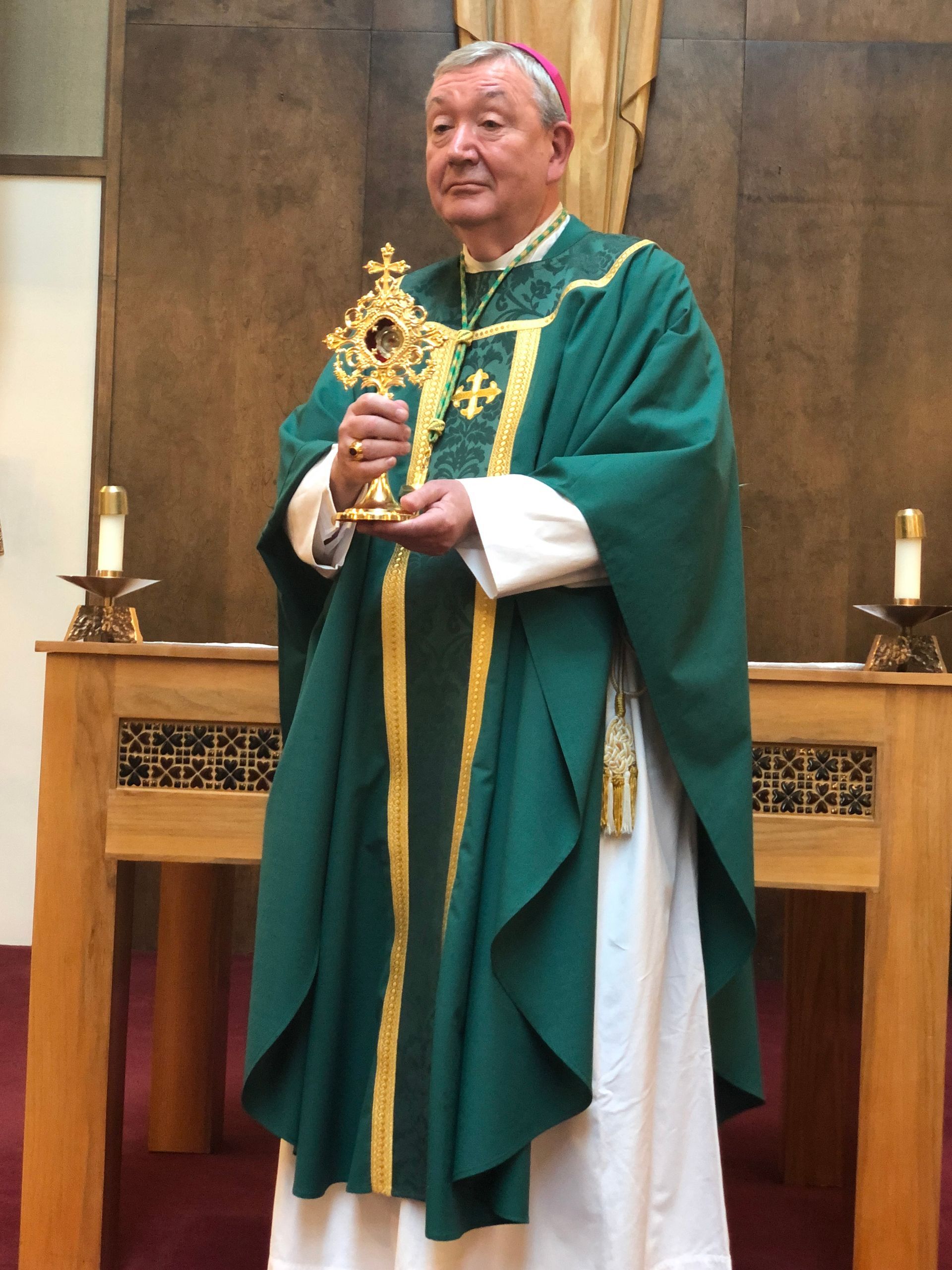
In 2019, during our 50th Jubilee celebration, the Diocese of Oslo gifted Saint Olaf Parish a relic of Saint Olaf, strengthening our connection to the saint whose witness continues to inspire us. Saint Olaf's life reminds us that authentic leadership is grounded in faith, justice, mercy, and courage.
Today, Saint Olaf Catholic Church is part of a growing parish family that includes Saint Peter Mission in Suquamish and Saint Cecilia Catholic Church on Bainbridge Island. Through the Archdiocese of Seattle's Partners in the Gospel initiative, we are working together as one Catholic family—sharing resources, strengthening ministries, and creating new opportunities for worship, formation, service, and community. United in faith and mission, we seek to welcome all people and help them encounter Jesus Christ in every stage of life.
Across Bainbridge Island, Poulsbo, Suquamish, Indianola, Kingston, Hansville, Little Boston, Port Gamble, and portions of Silverdale, our parish family brings together people from diverse backgrounds who are seeking a deeper relationship with Jesus Christ. Through worship, the sacraments, faith formation, pastoral care, outreach, and community life, we strive to be a welcoming Catholic home where faith is nurtured, connections are formed, and all are invited to belong
Saint Olaf of Norway,
King & Martyr
AD 995 – 1030
Baptized AD 1013/1014 in France
Saint Olaf established the Norwegian state on law. His predecessors as king established it by violence and force. Olaf introduced a European model for his reign.
But to move the country and the people from Viking violence to Christian civilization is a unique achievement. What makes it even more remarkable is the change in the people that happened because of and after Olaf’s death. He did not live to see this change.
His last moment was the Battle of Stiklestad. Apparently, this battle was won by those who wanted to tear the Christian state apart – a state modeled on England and Normandy – and put the people under foreign and arbitrary rule. Not only the people but also its aristocracy realized afterward that Olaf’s reign was milder, kinder, and more just, than that of the Danish vassals. Christian civilization, with all its demands, hitherto unknown, was then seen as a blessing. The king was their friend and protector, though he had to die before they realized it.
Why is Olaf a saint and a martyr? Olaf no longer fought for himself but for the faith and the consequences of the faith, equality before the law, protection of the weak, for the nation, and against arbitrary/foreign rule. In the Battle of Stiklestad, he was prepared to lay down his life, and he did.
Olaf’s death changed the people, his values became Norway’s values, and his law was accepted for the next 500 years. There were miracles and his intercession was forceful. Olaf was thought unreasonable during his time as king, however, after his death, he influenced a nation dominated by brutal men that justice before God is more important, as only a saint could do.
Source:
Presentation given by, Bishop Bernt Ivar Eidsvig, CRSA
Bishop of Oslo, Norway
Saint Olaf Parish in Poulsbo, WA on November 17th, 2019
On the occasion of our 50 Year Jubilee